
Why Choose a data blocker this summer

Summer means more time away from the office, more travel, more events, and more time spent out and about. But with more days out, it means your phone battery is going to need topping up, and not always somewhere convenient.
Public USB charging points are everywhere these days. Airports, train stations, hotel lobbies, even rental cars. They are very useful, but they can come with a risk most people don't think about: juice jacking.
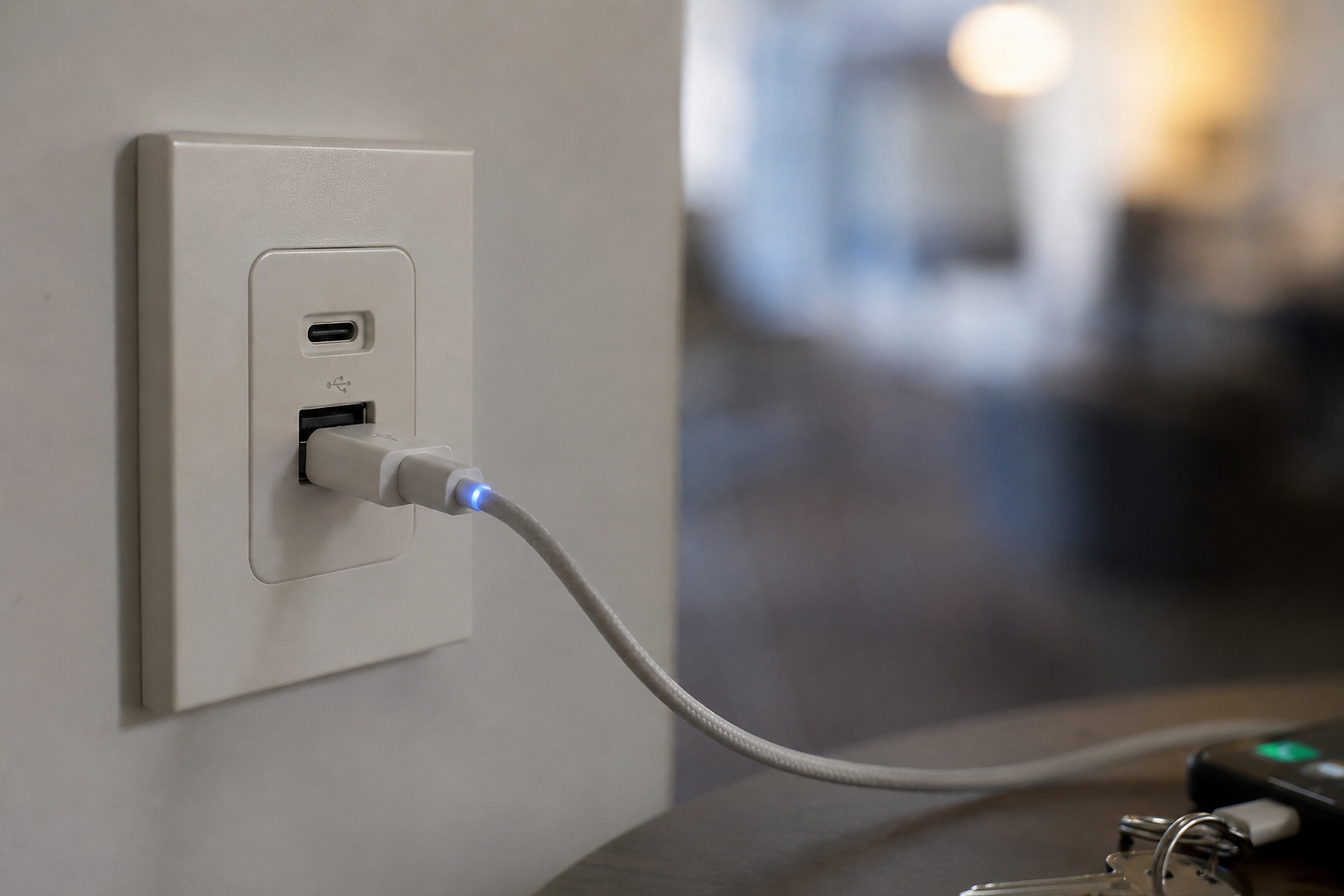
What Is Juice Jacking?
Juice jacking is when a hacker compromises a public USB charging port and uses it to attack your device while it charges. It sounds elaborate, but the attack itself is relatively straightforward to carry out, which is part of why it's becoming more common.
It opens a data connection. From there, attackers can pull your contacts, photos, messages and passwords, install malware that sticks around long after you've unplugged, or in worst case scenarios, lock you out of your own device and demand payment to give it back. The scary part is you won't notice a thing while it's happening.
USB connections were never designed with security as the priority. They carry both power and data through the same port, which means the moment you plug in, there's a potential data pathway open, whether you want one or not. A tampered port exploits exactly that.
How Do You Know If It's Happened?
The most uncomfortable part is that you probably won't be able to tell. That's what makes juice jacking particularly unsettling. There's no notification, no obvious sign, and often no immediate consequence.
That said, there are a few things worth watching out for after using a public charging port:
- Your battery is draining faster than usual, which can be a sign of background processes running
- Your phone is running warmer than normal when idle
- Unfamiliar apps appearing that you didn't install
- Unusual account activity or login alerts from services on your phone
- Your device is behaving sluggishly or crashing more than normal
None of these are definitive proof, and they can all have innocent explanations. But if you notice a few of them together after charging in public, it's worth running a security scan and changing your passwords as a precaution.
Why Summer Makes It Worse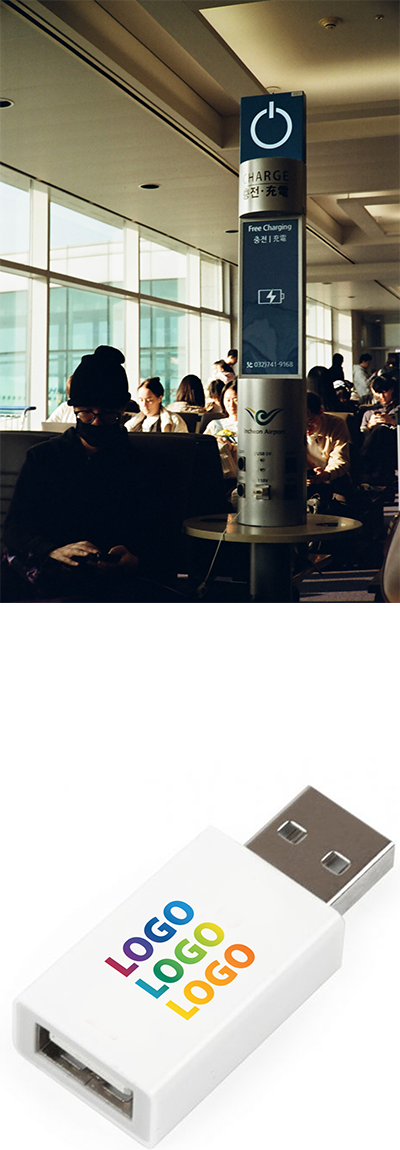
Summer just puts you in the firing line more often.
You're in airports more. You're at festivals where charging stations are busy, unmonitored and set up by who knows who. You're out for longer stretches, your battery takes a hammering, and the temptation to plug into whatever's available gets stronger.
While juice jacking is rare, it does happen, and if you have sensitive information on your devices, a data blocker is worth it.
How Does a Data Blocker Help?
A data blocker is a tiny adapter that goes between your cable and the USB port. The clever bit is that it blocks the data pins stopping any data transfer.
Power still flows through fine, so your phone charges as normal, but the connection that would let malware communicate with your device is completely cut off.
It's about the size of a standard USB stick, so it can easily fit in your bag.
A Few Other Things Worth Doing to Prevent Juice Jacking.
A data blocker is one layer of protection, but it's worth pairing it with a few habits, or if not using one, do the following.
- Carry a power bank. Honestly, the simplest fix. If you've got your own charge on you, you will never need to touch a public port.
- Use your own cable. Using dodgy cables can also steal your data, and they look identical to genuine ones. Keep one you trust in your bag at all times.
- Use a VPN on public Wi-Fi. Airport and hotel networks are often poorly encrypted. A VPN keeps your traffic private even on a dodgy network.
- Look for a wall socket instead. USB Ports are becoming the norm in public spaces, but they put you at risk. Instead, a standard AC outlet only delivers power, so no data transfer is possible.
Should You Get One?
If you're regularly charging your phone in public, yes. They're particularly worth having if you travel for work, attend events, or tend to be out all day without a chance to charge at home or in the office.
The risk of juice jacking is still relatively low, but it's a risk that costs almost nothing to eliminate. A data blocker is one of those products that sits quietly in your bag doing its job until the one time you actually need it.